


 Click here to read the article
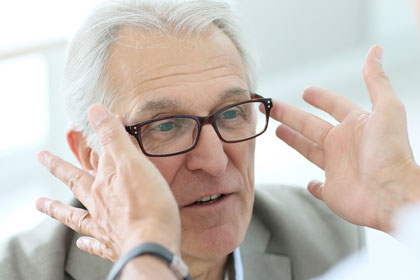
In the changing landscape of the optical market, raising professional standards becomes a priority. The challenge is to be pro-active and not re-active. In this context, the International Opticians’ Association aims to bring opticians around the world together to consider the future and create plans for development of the profession. Considering new technologies and understanding emerging consumer behaviours are key factors in anticipating major changes that will affect the scope of practice. Elaine Grisdale explains in this interview what is the (new) role of the IOA and how to work more effectively to ensure the public has better outcomes when seeking first class eyecare and adapted eyewear. She also shares some thoughts on how to prevent independent opticians from becoming “dispensing dinosaurs” in what is the fastest moving period in optics – ever.
Article from the magazine "Point de vue"

 Click here to read the article
Fitting progressive lenses on a person with presbyopia is a complex technical act that requires know-how, experience and psychology. The success of a fitting depends on a chain of actions that can each be a source of inaccuracy. In a large study conducted in France with Les Opticiens J. Torrilhon, we have evaluated the satisfaction levels of people wearing Varilux® progressive equipment. This article presents the various results that we have obtained and offers an analysis of them.
Article from the magazine "Point de vue"
 Click here to read the article
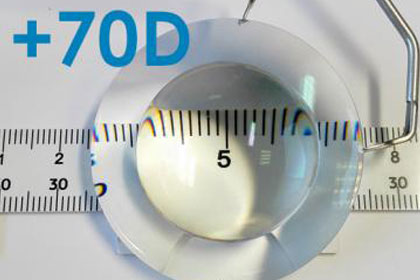
For people suffering from low vision today, it often takes tenacity and perseverance to find an optical solution that allows them to optimize their remaining sight. Meg Zatorski knows this only too well. Afflicted with Stargardt disease (a common form of inherited juvenile macular degeneration), she spent a decade trying to obtain powerful enough high plus lenses to enable her to regain the ability to read. Essilor’s Stanislas Poussin and Anne-Catherine Scherlen recount how her challenge was met and what needs to be done so others like her can benefit from a solution that meets their visual needs.
Article from the magazine "Point de vue"

 Click here to read the article
Uncorrected vision continues to endanger the lives of drivers, passengers, and pedestrians around the world. Compounded by external factors such as nighttime driving, inclement weather, and adverse road conditions, uncorrected vision contributes to more than 1.25 million road accident deaths each year. Until recently, the intersection of vision and road safety has not received adequate attention. Consequently, there is a lack of awareness around the need to address the impact of vision problems on driver and road safety. While governments and policymakers can play a significant role in raising greater awareness of this public health threat, eye care professionals are also part of the solution as they are a competent authority in promoting effective assessment of vision and correcting drivers’ visual functions.
Article from the magazine "Point de vue"